
Paul Munyaka
 Aug 05 2025
A Chinese brain-computer interface (BCI) company, BrainCo, is currently raising significant attention in the neurotechnology and artificial intelligence sectors. The company is actively seeking around $100 million in pre-IPO funding, aiming for a valuation exceeding $1.3 billion, with plans to go public either in Hong Kong or mainland China. This strategic financial move signals a new phase for BrainCo as it seeks to scale its innovations in the global brain-tech race.
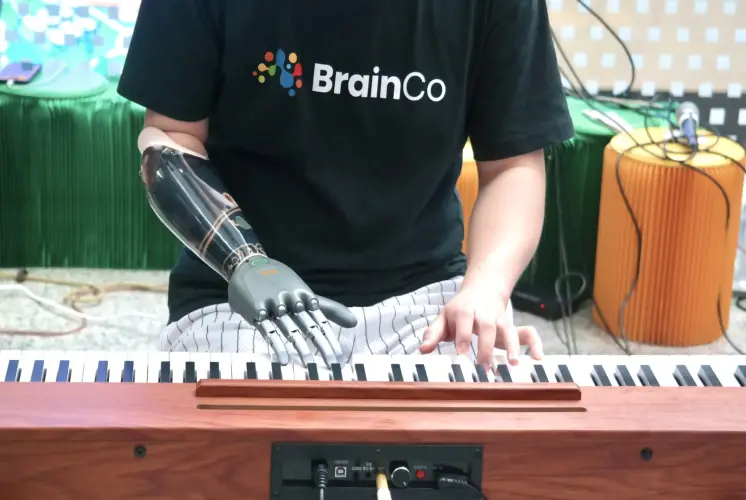
Founded in 2015 by Han Bicheng, a Harvard graduate, BrainCo has emerged as a prominent name in the development of brain-computer interface systems. The company specializes in creating AI-powered prosthetics and neural devices that allow users to control robotic limbs and interact with digital systems using brain signals. One powerful demonstration includes an amputee playing a keyboard using a mind-controlled mechanical arm, showcasing the practical application of its technology.
BrainCo's core innovation lies in translating neural activity into digital commands, bypassing physical muscular systems. This approach has broad implications, particularly in rehabilitation, prosthetics, and accessibility, offering life-enhancing solutions to individuals with physical disabilities. These BCI systems could also extend to education, gaming, and productivity tools, pushing the boundaries of how humans interact with machines.
The company’s growing prominence reflects the global surge of interest in brain-machine interfaces, a field previously dominated by high-profile Western ventures. BrainCo’s rapid progress suggests that China is becoming a formidable player in frontier technologies, including neuroscience, robotics, and artificial intelligence. The firm's success contributes to the broader narrative of technological self-sufficiency and innovation leadership emerging from the region.
The potential listing in Hong Kong or mainland China aligns with BrainCo’s strategy to root its financial growth in domestic capital markets, potentially drawing on a supportive regulatory environment and increasing investor appetite for deep-tech ventures. By preparing for an initial public offering, BrainCo is also positioning itself to compete directly with global leaders and expand the commercial applications of its technology.
In addition to its technological innovation, BrainCo’s valuation and funding efforts point to strong investor confidence in the commercial viability of BCI technologies. As applications of BCI move from theoretical research into real-world use cases, companies like BrainCo are leading the way in demonstrating tangible benefits and business potential.
In summary, BrainCo’s developments mark a turning point in brain-computer interface innovation. With a strong foundation in AI, neuroscience, and prosthetics, it is not only enhancing human potential but also reshaping how we think about the integration between mind and machine. Its trajectory is a reflection of how emerging technologies are evolving beyond labs and headlines into meaningful, market-ready solutions with global impact.


At TechMaverick, we specialize in building powerful mobile applications using Flutter, allowing us to create high-quality, cross-platform apps from a single codebase.tyui