
Paul Munyaka
 Aug 05 2025
Over the last decade, the adoption of electric vehicles (EVs) in Kenya has experienced significant growth and momentum, with the number of licensed electric and plug-in hybrid vehicles surpassing 9,000 in 2025, according to the Electric Mobility Association of Kenya (EMAK).
The local charging infrastructure industry has already conformed to a common standard called the Open Charge Point Interface (OCPI) protocol, which uses specific terminology to designate charging infrastructure: station location, EV charging port, and connector.
OCPI is used worldwide and adopted by many companies and several roaming hubs to support connections between eMobility Service Providers (MSPs), who have EV drivers as customers, and Charge Point Operators (CPOs), who manage charge stations. It enables EV drivers to use charging stations from various networks with a single account, simplifying the charging experience.
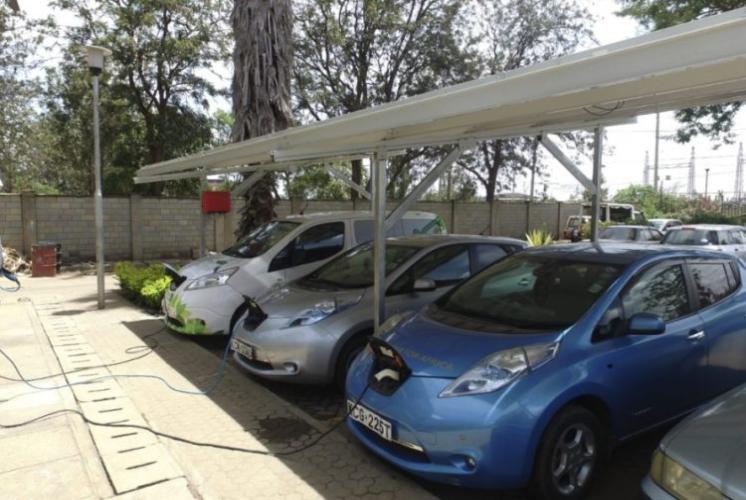
Charging an EV can be a challenge in Kenya, primarily due to limited charging infrastructure, high initial costs, and concerns about grid stability. Data from Automag, a digital platform focused on automotive news, reviews, and information, shows that there were only slightly over 100 functioning charging stations across the country as of July 2024.
To address this gap, the government, through the state utility provider Kenya Power & Lighting Company Plc (“Kenya Power”), is working with partners to expand access to public EV charging in major cities, towns, and areas across all 47 counties.
Starting with Nairobi, Nyeri, Kisumu, Eldoret, Nakuru, Mombasa, and Taita Taveta counties, Kenya Power announced a robust plan in May 2025 to install 45 electric vehicle (EV) chargers within the next year.
Additionally, KPLC will invest up to Ksh258 million over the next three years to drive the uptake of electric vehicles in the country, which is projected to reach 5% of all new vehicle registrations by the end of 2025.
Several key players are also contributing to the growth of electric vehicle (EV) charging infrastructure in Kenya. These include established companies like TotalEnergies, as well as emerging players such as EVChaja, EVBox, BasiGo, and Moja EV.
Charging equipment for EVs is classified by the rate at which batteries are charged. There are three different charging levels for EVs:
Level 1 charge:
Level 2 charge:
Level 3 charge:
The cost to establish a single EV charging station can range from Ksh250,000 to Ksh1 million or more, depending on the type of charger and installation complexity. Level 2 charging stations typically cost between Ksh300,000 and Ksh1.5 million, while DC fast chargers can cost over Ksh5 million.
Kenya Power has invested in pilot charging stations at their headquarters in Stima Plaza, Nairobi, with costs around Ksh6.5 million for a facility that includes both fast and standard chargers.


At TechMaverick, we specialize in building powerful mobile applications using Flutter, allowing us to create high-quality, cross-platform apps from a single codebase.tyui